|
JFrog and Gradle team up on Feb-19 | Should we worry about AI
overwhelming our delivery pipelines? | When CI infra becomes a hidden tax on AI |
Insights from Dave Farley | Over 30,000 devs aren’t wrong | Open DPE and AI
positions around the world!
Want to connect with Gradle? Email me at owhite@gradle.com,
and have a productive
month!
|
|
|
|
FEATURED UPCOMING EVENT
|
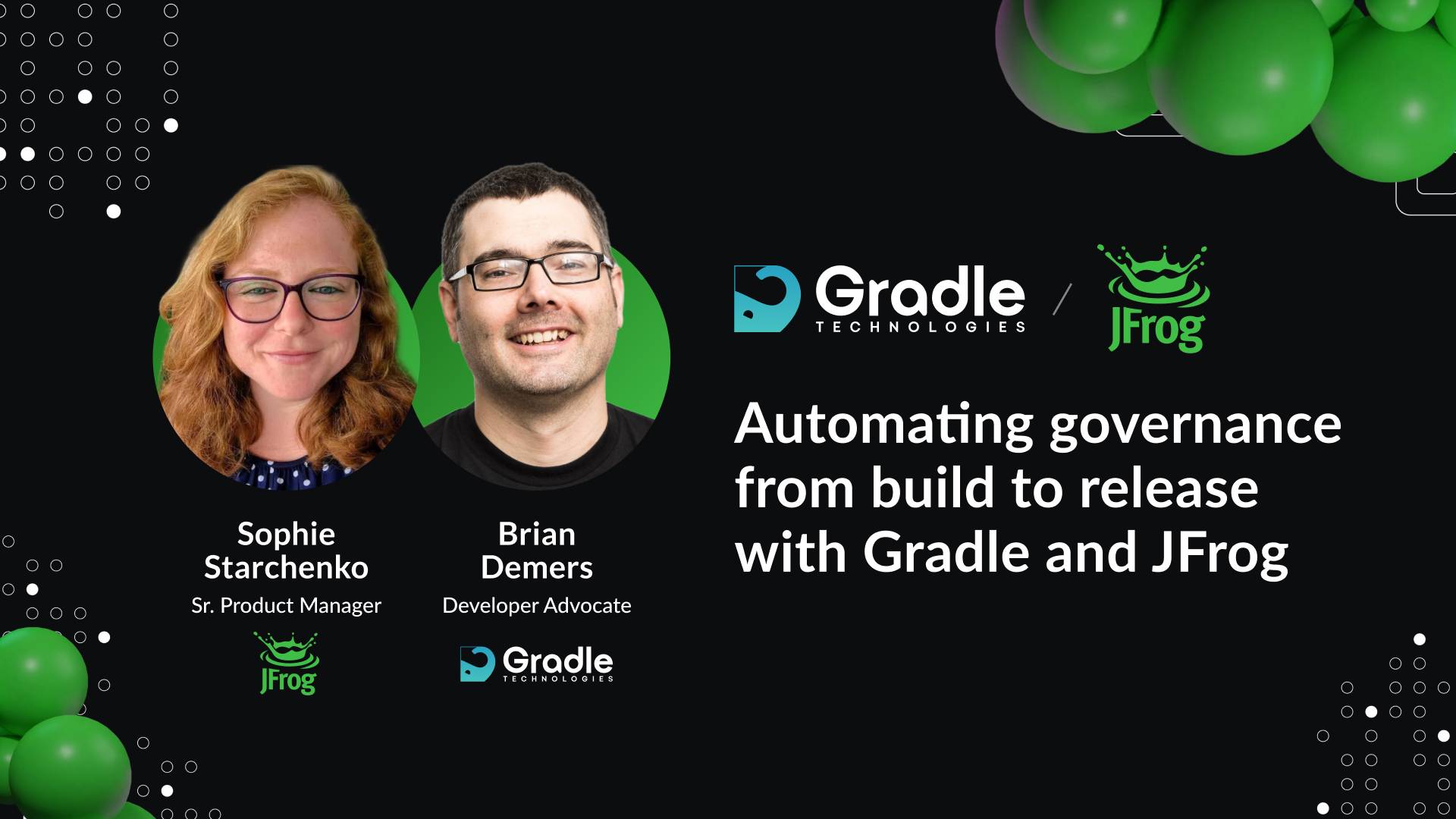
🌐 Feb-19: JFrog and Gradle team up to help you automate governance from
build to release
|
 |
|
AI-accelerated development is flooding the software supply chain, making the manual
effort required to verify the chain of custody for “Every. Single. Artifact.”
physically impossible. For engineering leaders, this creates a critical blind spot:
while standard security scans tell you what is inside your code, they often miss the
integrity of the build process itself.
Join
Gradle and JFrog on Feb-19 as we introduce the emerging practice of
Continuous Governance, Risk, and Compliance (GRC) for DevOps—or "DevGovOps."
We will demonstrate how the integration between Develocity Provenance Governor and
JFrog AppTrust creates an immutable system of record for your software, ensuring
that only verified, policy-compliant code reaches production.
Oh, and if you missed “CI Without the Wait: Scale Throughput with Universal Cache”,
you can watch
the recording.
|
| Register
here |
|
|
 |
EXPERT TAKES
|
Amazon: Your AI coding assistants will overwhelm your delivery
pipeline
|
 |
|
In a recent Amazon
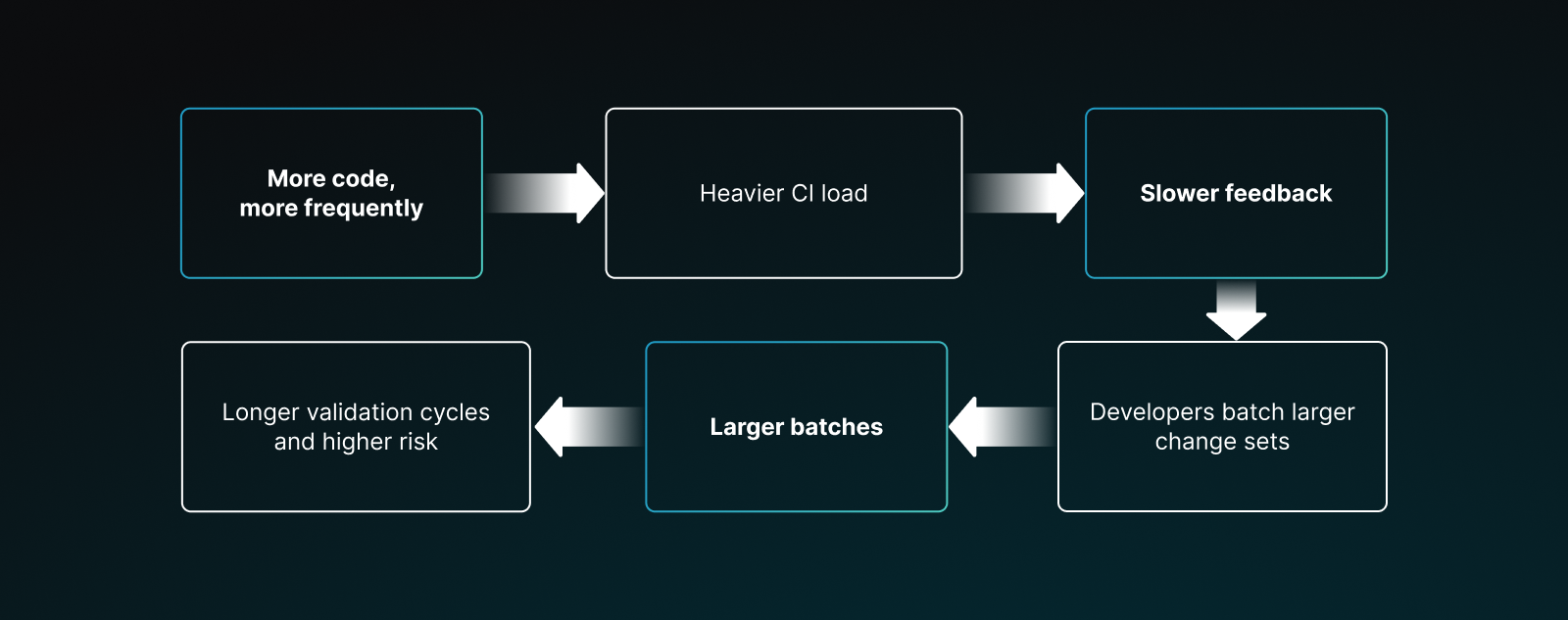
Enterprise Strategy blog, industry experts highlight a growing tension
in the modern software supply chain: AI is making code generation nearly effortless,
but the infrastructure required to validate and deliver that code is hitting a
breaking point.
As developers double
their code output using AI assistants, the sheer volume of commits,
builds, and tests is surging. For engineering leaders, this creates a "Developer
Productivity Paradox." If your delivery pipeline isn't optimized for this 10x
increase in activity, the perceived gains from AI at the IDE level will be swallowed
by downstream bottlenecks, longer wait times, and exploding CI costs.
To remain competitive, shifting to a high-velocity DPE model is no longer
optional—it is a strategic requirement for the GenAI era. We’ve
broken down the steps you need to take to ensure your infrastructure can
handle the tsunami.
|
| Learn
more |
|
|
|
|
IDEAS & INSIGHTS
|
Is your CI infrastructure the hidden tax on your AI strategy?
|
 |
|
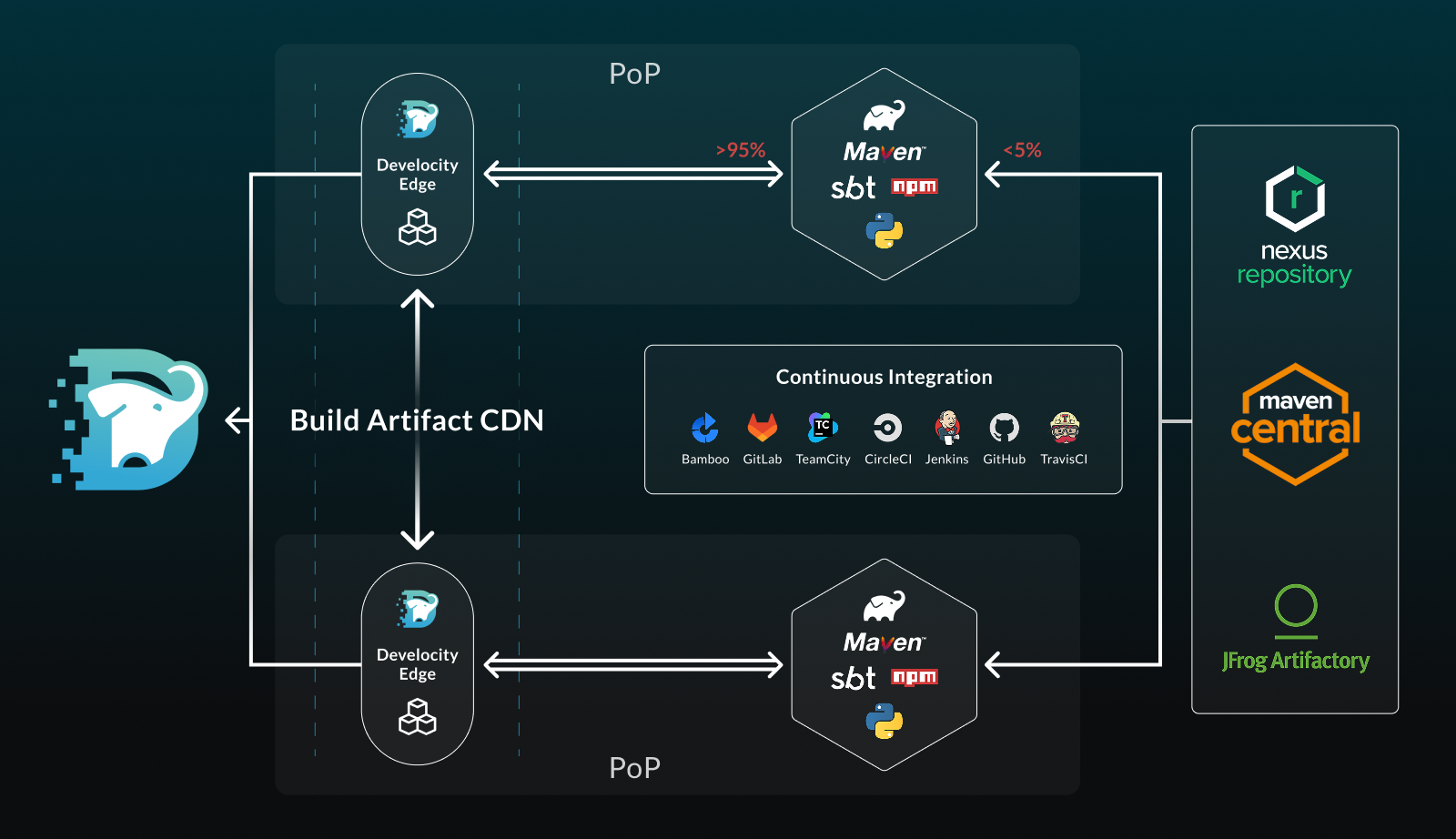
The physical reality of moving massive build artifacts across global networks as
AI-driven code volume scales is creating a new category of latency—and a massive
line item on the CI infrastructure bill.
In this deep dive, Build
Artifact CDN: Strategic Infrastructure for AI-Driven DevOps, we explore
why traditional caching is no longer sufficient for the high-velocity,
globally-distributed teams of 2026. When your developers ship commits at 4x their
previous rate, every minute spent re-downloading dependencies or waiting for remote
artifacts is a direct hit to your ROI.
By treating build artifacts with the same strategic importance as a content delivery
network (CDN) treats web assets, leaders can:
-
Decouple throughput from geography to empower 24/7 global development
without regional lag.
-
Slash cloud egress costs by optimizing how and where data is stored and
retrieved.
-
Future-proof the pipeline for the even greater data demands of agentic AI
and autonomous dev agents.
|
| Read
more |
 |
|
|
EXPERT TAKES
|
Dave Farley: AI makes it easier than ever to drown in your own code
base
|
 |
|
(image source)
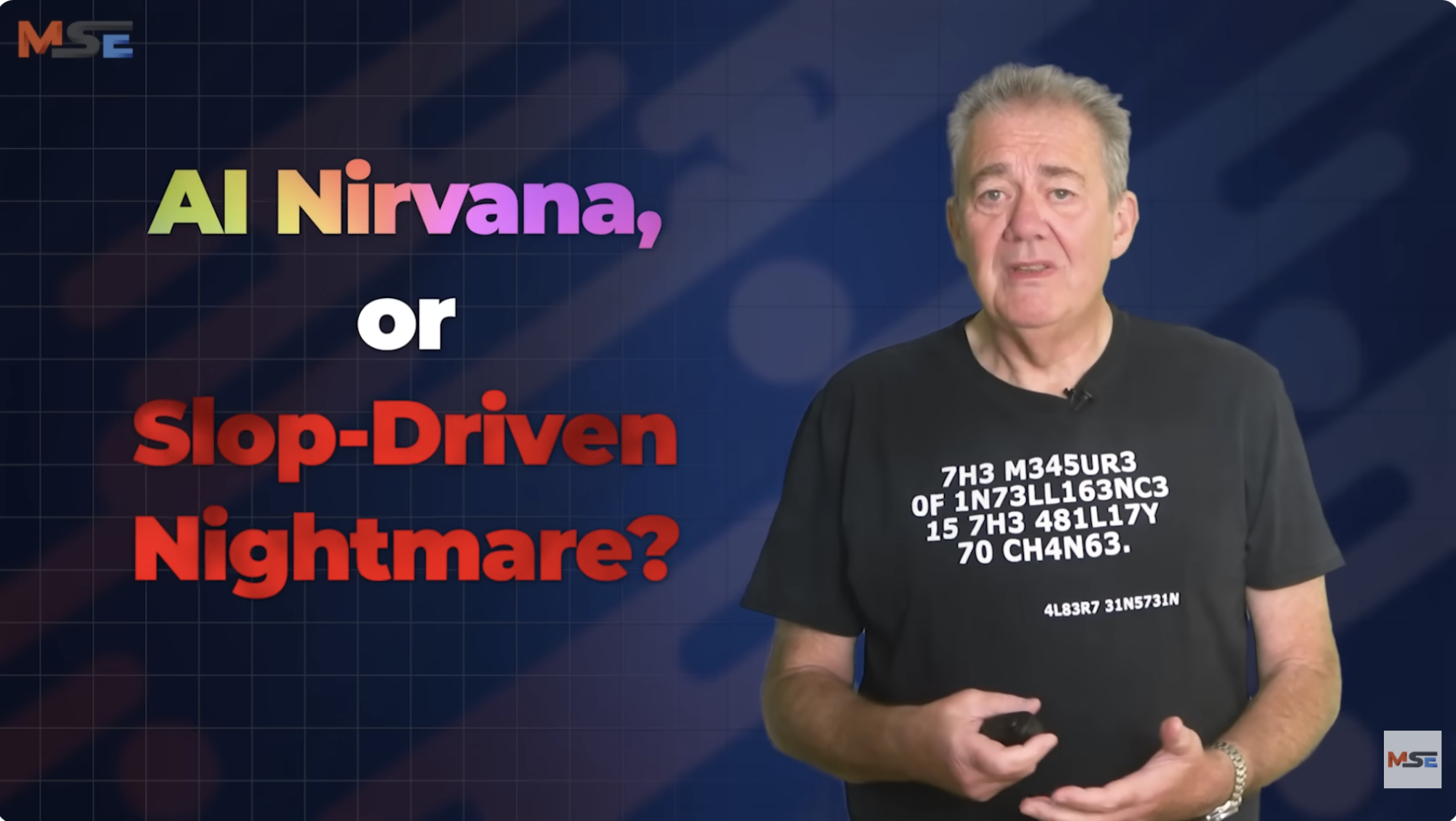
In
this short video by our friend and industry luminary, Dave Farley, we
hear his no-nonsense perspective on the upcoming "maintenance nightmare” fueled by
AI.
While many celebrate AI for initial coding speed, maintenance represents 50–80% of
total cost of ownership. A controlled study of 151 professionals reveals that AI
doesn’t automatically improve code quality; developer skill remains the primary
driver of maintainability.
For leaders, prioritizing short-term feature velocity via AI is a costly tradeoff if
it ignores downstream evolution. True engineering ROI requires focusing on code
health and discipline—not just how fast we can generate "AI slop."
|
| Watch
now |
 |
|
|
|
BEST PRACTICES
|
How 30,000+ engineers are troubleshooting builds and optimizing performance
via one IntelliJ plugin
|
 |
|
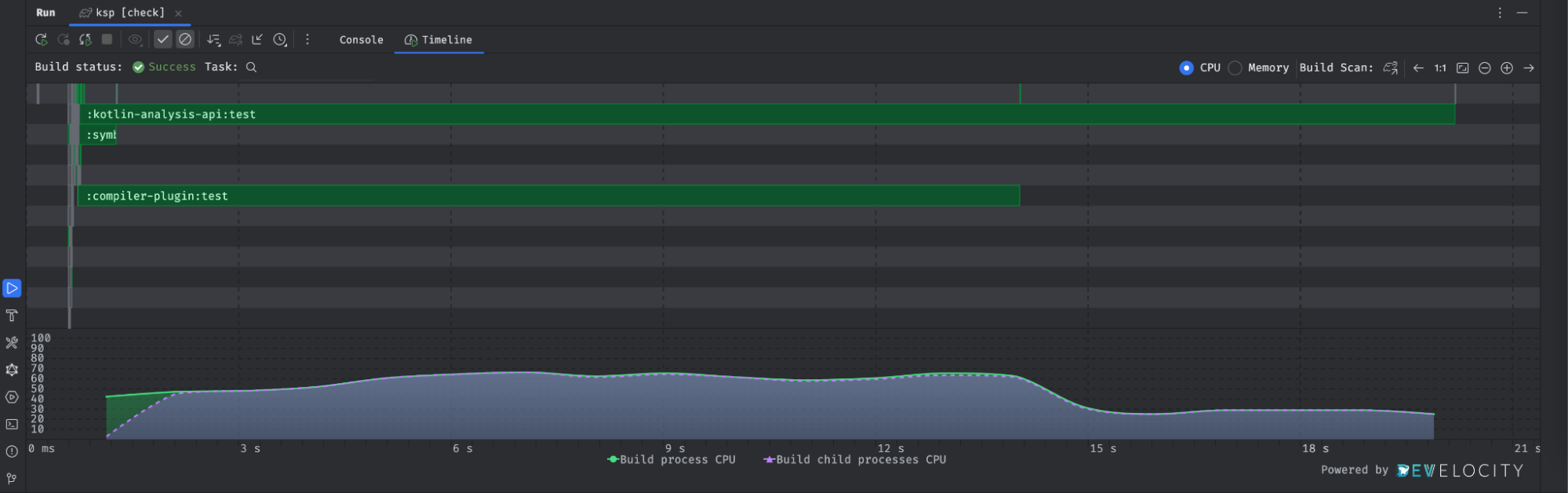
Our popular Develocity
IntelliJ IDEA plugin recently surpassed 33,000 downloads, highlighting a
significant industry trend toward protecting developer "cognitive flow."
High-performing organizations are increasingly recognizing that the workspace itself
is a critical lever for engineering ROI, as keeping developers in their IDE prevents
the productivity leaks caused by context-switching.
By integrating real-time
performance insights directly into the coding environment, teams are
resolving build failures faster and stabilizing delivery cycles without the overhead
of external tools.
For a deeper look at how this shift toward in-flow troubleshooting impacts
organizational throughput, you can explore the recording of our AI-driven
troubleshooting session.
|
| Learn
more |
|
|
|
CAREER OPPORTUNITIES
|
DPE (and AI) job openings
|
|
The industry needs you! You might find your dream role among these job openings
related to DPE, AI developer productivity, and engineering leadership.
NOTE: These postings are active at the time of sending but are subject to
change.
Gradle’s customers are hiring:
Other open positions around the world:
|
|
|
|
 |
|
Gradle Technologies | 2261 Market Street | San Francisco, CA 94114
Privacy
Policy | Unsubscribe
|
|
|
|
|
|
|